Specialization:
Ph.D., University of California, Berkeley, English
Asian American and comparative ethnic literatures, women's literature, feminist studies, cultural studies, family and intergenerational conflict, power and subject formation, gender and the embodied subject, critical mental health, sexual violence.
Bio:
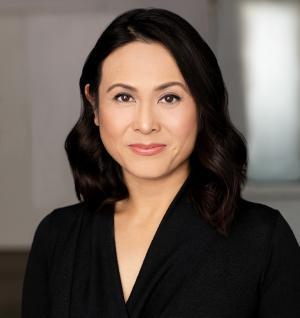
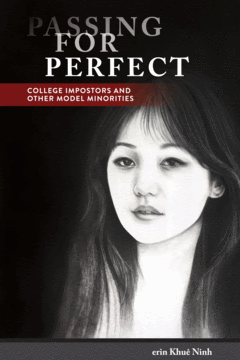
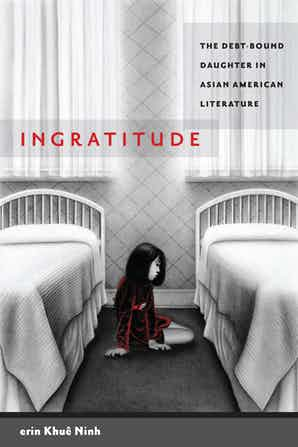
erin Khuê Ninh writes about the model minority as racialization and subject formation (not myth). Her books are Passing for Perfect: College Impostors and Other Model Minorities (featured in the New Yorker), and Ingratitude: The Debt-Bound Daughter in Asian American Literature (awarded Best Literary Criticism by AAAS). Along with Shireen Roshanravan, she edited #WeToo: A Reader, a special issue on sexual violence for the Journal of Asian American Studies (awarded "Best Public Intellectual Special Issue” by the Council of Editors of Learned Journals)..
Ninh is also affiliate faculty in Feminist Studies and Comparative Literature.
Publications:
monographs
Passing for Perfect: College Impostors and Other Model Minorities. Temple University Press, Fall 2021.
Ingratitude: The Debt-Bound Daughter in Asian American Literature. New York University Press, March 2011. (Literary Criticism Book Award 2011, Association for Asian American Studies)
(translation of) Ingratitude: The Debt-Bound Daughter in Asian American Literature. With Forewords by Sau-ling Cynthia Wong and Hsinya Huang. Translated by Su-ching Huang. Taipei: Bookman, 2014.
selected academic publications
#WeToo: A Reader, a special issue of the Journal of Asian American Studies, February 2021. (co-editor); partially crosspublished in partnership with the Asian American Writers Workshop. (Best Public Intellectual Special Issue 2021, from the Council of Editors of Learned Journals)
"Without Enhancements: Sexual Violence in the Everyday Lives of Asian American Women" Asian American Feminisms & Women of Color Politics, U of Washington P, 2018.
"Model Minority Narratives and the Asian American Family” The Cambridge Companion to Asian American Literature, Cambridge UP, 2015.
"Affect/Family/Filiality" The Routledge Companion to Asian American and Pacific Islander Literature, Routledge UP, 2014.
“The Model Minority: Asian American immigrants families and intimate harm” Kalfou 1:2, 2014.
“Gold Digger: Reading the Marital and National Romance in Bharati Mukherjee's Jasmine" MELUS 38:3, Fall 2013. Please note errrata: p.1-- "less ideologically anathema South Asian American fiction" (not "less ideological"); p. 6--"depends, no less" (not "demands").
“Advice on How Not to Misread the Tiger Mother” Amerasia Journal, September 22, 2011.
“Forwarding Memory through Diaporama: The Passing-on of Viet Kieu Nostalgia” (original title: "Nostalgia Going Forward) Amerasia Journal 35:2, Summer 2009.
Lang Toi PPT: for "Forwarding Memory through Diaporama," above.
selected other publications
"Còn Dùng Được: A Refugee Guide to Salvage," Amerasia journal, Volume 51, 2025
Afterword for Blu's Hanging, LitHub, June 17, 2025.
"Harvard's Bad Counsel" Reappropriate, May 1, 2021.
“Jeremy Lin, face of America” ESPN, March 15, 2012.
“An Ode to Ơi.” diaCritics, December 11, 2011.
“Asian American Like Me.” Huffington Post, May 26, 2011.
“Amy Chua and the Externalized Cost of Book Sales.” Huffington Post, January 18, 2011.
Courses:
Introduction to Asian American Literature (5): An historically-structured survey course. Texts include: Carlos Bulosan's America is in the Heart, John Okada's No-No Boy, Maxine Hong Kingston's The Woman Warrior, David Henry Hwang's M. Butterfly. (next offered: Winter 2024)
Please note regarding AsAm 5: GOLD may indicate that space remains in some sections, but courses are full when *lecture* is full. No overriding add codes will be available until the second week of classes.
Martial Arts in US Culture (10): A cultural-studies approach to the history, practice, and influence of Asian martial arts on American culture. Students will engage in interdisciplinary research methods as part of their coursework, looking in these kick-ass things and their very considerable baggage.
Viet American Experience (100EE): A course looking at the production of historical and cultural narratives about Vietnamese American experience. What debates do second-generation Viet Americans navigate, and how do they choose the stories they themselves tell?
Asian American Fiction (122): On the Asian American detective story... sorta. We’ll read mystery fiction as a genre—with some stories that are overtly mysteries, others not. We’ll also address a set of questions that collectively these books keep coming back to over time: questions about ethnic community and (interracial) violence. Texts include: Hisaye Yamamoto's Seventeen Syllables, Nina Revoyr's Southland, Suki Kim's The Interpeter, and Steph Cha's Your House Will Pay. (next offered: Winter 2024)
Comparative Ethnic American Literature (124): This course, nicknamed "dating in rape culture," reads literature alongside film and other media on the themes of beauty and romance, through gender and race. It will emphasize the “culture” in rape culture. That is, rather than dwell on the moments or hours just before or during an act of sexual violation, our concern will be the lifetimes of gender training, subject formation, and cultural norms of romance or attraction that form its conditions of possibility. Texts include Toni Morrison's The Bluest Eye, Sigrid Nunez' A Feather on the Breath of God, and Dorothy Allison's Bastard out of Carolina.
Asian American Women's Literature (128): A literary meditation on sexual violence in wartime. The novels we’ll read will span the globe—certainly collectively, but often even within a single narrative. By course’s end, however, we come back home: to California, and college campuses, because #WeToo. Texts include: Nora Okja Keller's Comfort Woman, Joy Kogawa's Obasan, Aimee Phan's We Should Never Meet, and Chanel Miller's Know My Name.
Asian American Mental Health (162): A humanities-based and ethnic/gender studies approach to mental health.
Asian American Academic Rhetoric (182): A workshop devoted to honing academic writing skills. Designed for the upper-division student who has already mastered the mechanics of argumentative essay writing, as offered by the Writing Program, and who would write with professional polish. Students will engage each week in critiquing published scholarly work, editing journalistic copy submitted for publication, or workshopping each other’s writing intensively. By quarter’s end, students shall develop a keen editor’s eye, able to recognize and hopefully to produce academic prose that is rigorous: precise, concise, clear.